Midgham Gardens: A living tapestry of heritage and nature
As you leave behind the rush of the main road, the first impression of Midgham Gardens arrives in the form of eagle-topped gates. Majestic yet unassuming, they set the tone for the estate beyond: stately, but never ostentatious. Their story, however, carries a touch of whimsy - these are not the original gates. Those, we are told, were once lost in a hand of poker, lending the current entrance a charm that is both elegant and disarmingly human.
Passing through, the world immediately shifts. The noise and clutter of modern life fall away, replaced by a serenity that feels as though it has been waiting patiently for you. Ahead, a half-mile gravel track unfurls, flanked by grand horse chestnut and lime trees whose presence speaks to centuries of careful stewardship. The approach is alive with movement: deer darting through fields, squirrels busy with their harvest, and birds of prey circling above. A green woodpecker, with its characteristic bounding flight, often escorts you toward the house.
The orchard and its views
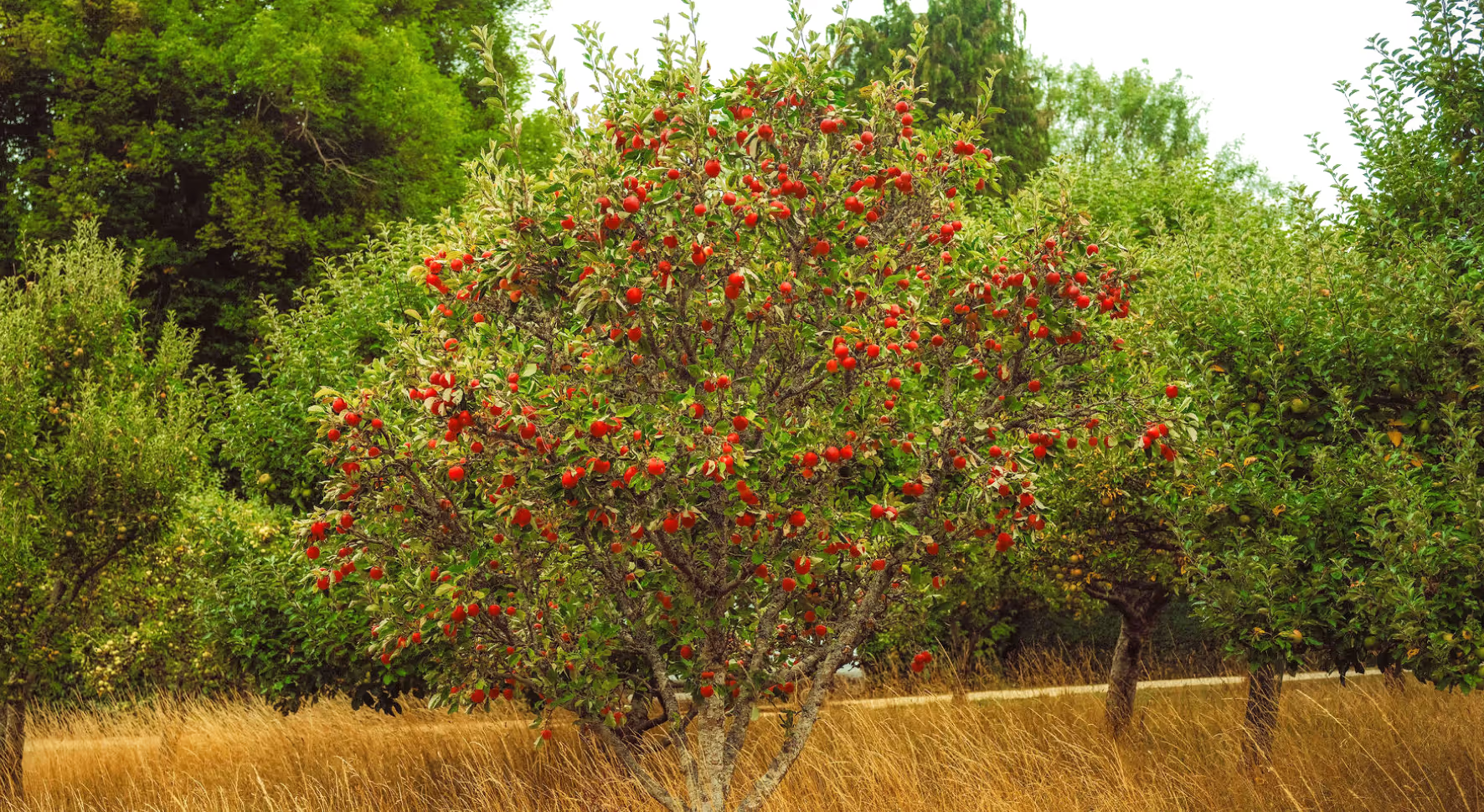
Arriving at Midgham House, one is greeted to the right by a venerable orchard, a testament to English horticultural heritage. Its apple trees, bearing varieties long cherished and nearly forgotten, stand beside choice pears and plums. From here, the views are among the finest in Midgham: across a sweeping haha, through the estate’s spare fencing, and out toward fields where water gathers year-round, creating a natural marshland alive with reeds, docks, and the occasional cypress rising from the damp earth.
On a frosty winter’s morning, the scene becomes almost ethereal - cobwebs jeweled in ice, grasses silvered by dawn, and rolling hills that catch the first light. On the orchard’s eastern edge, partially veiled by a low, ivy-softened wall, lies the estate cemetery. Far from somber, it is a place of quiet dignity, home to beautifully carved gravestones and the names of local figures whose stories remain etched in stone.
Formal gardens and historic echoes
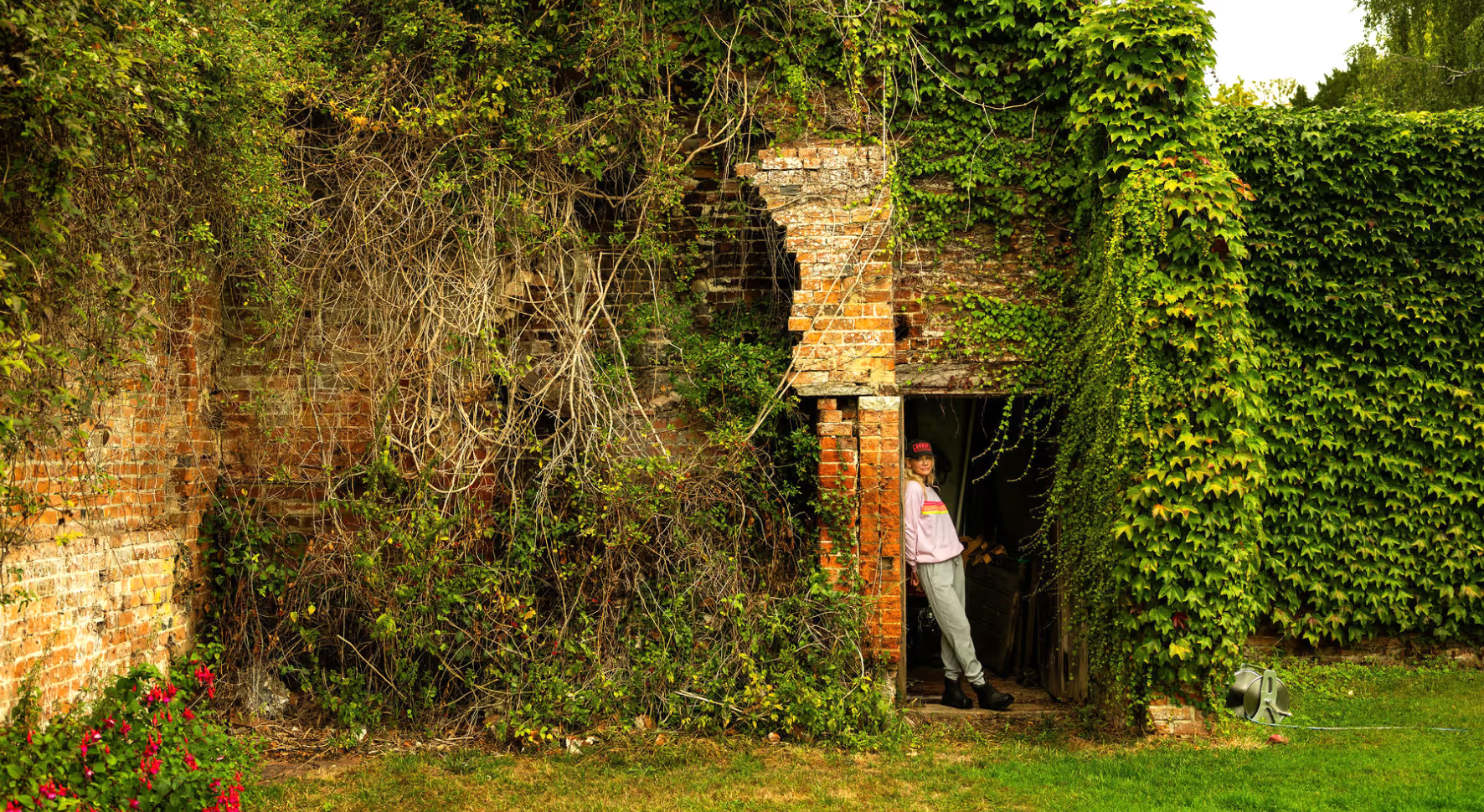
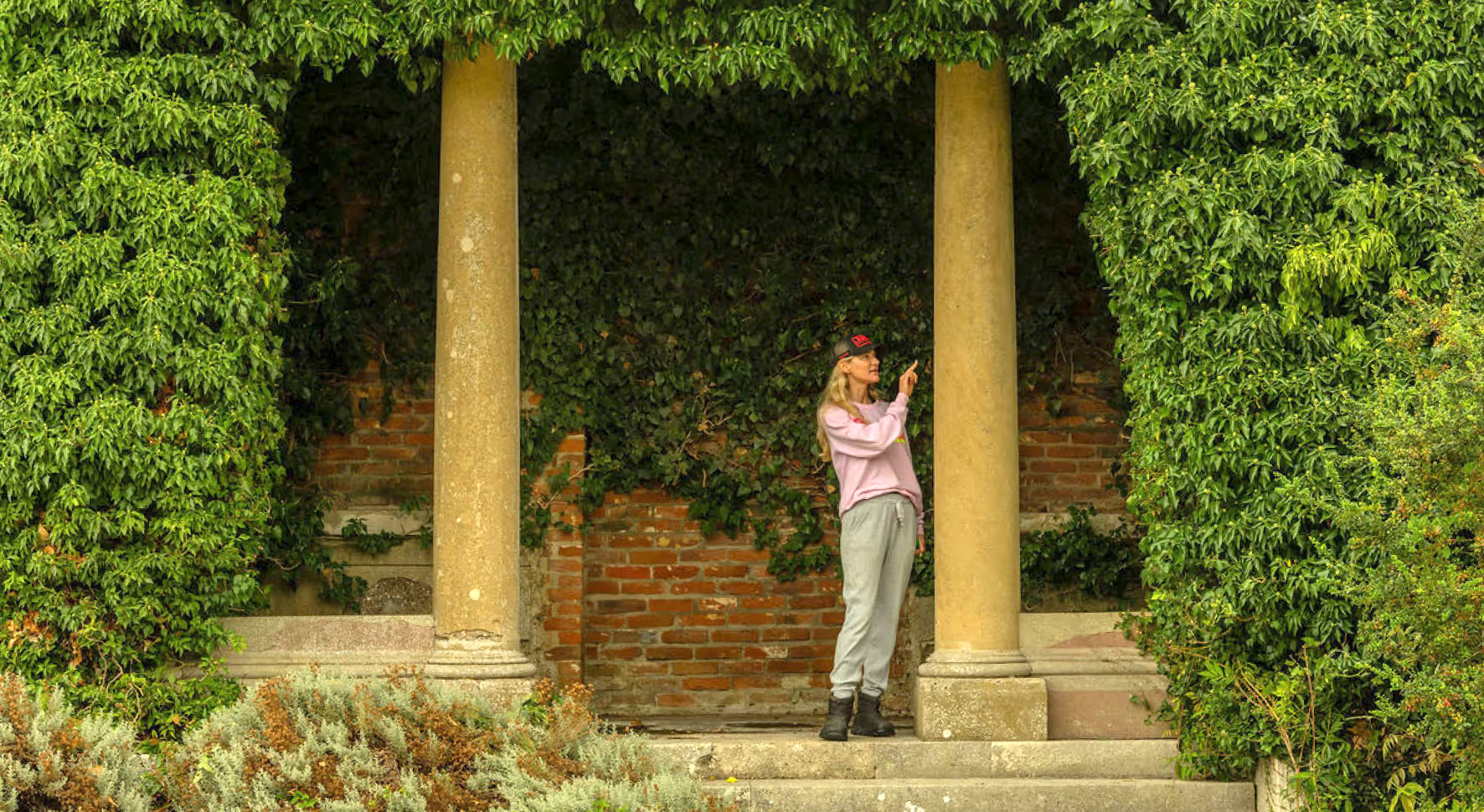
Climbing York stone steps beneath an arbor dripping with wisteria, visitors reach what was once the grand entrance to the original house. Today, it stands bricked and ivy-clad, a romantic ruin that whispers of the estate’s layered past.
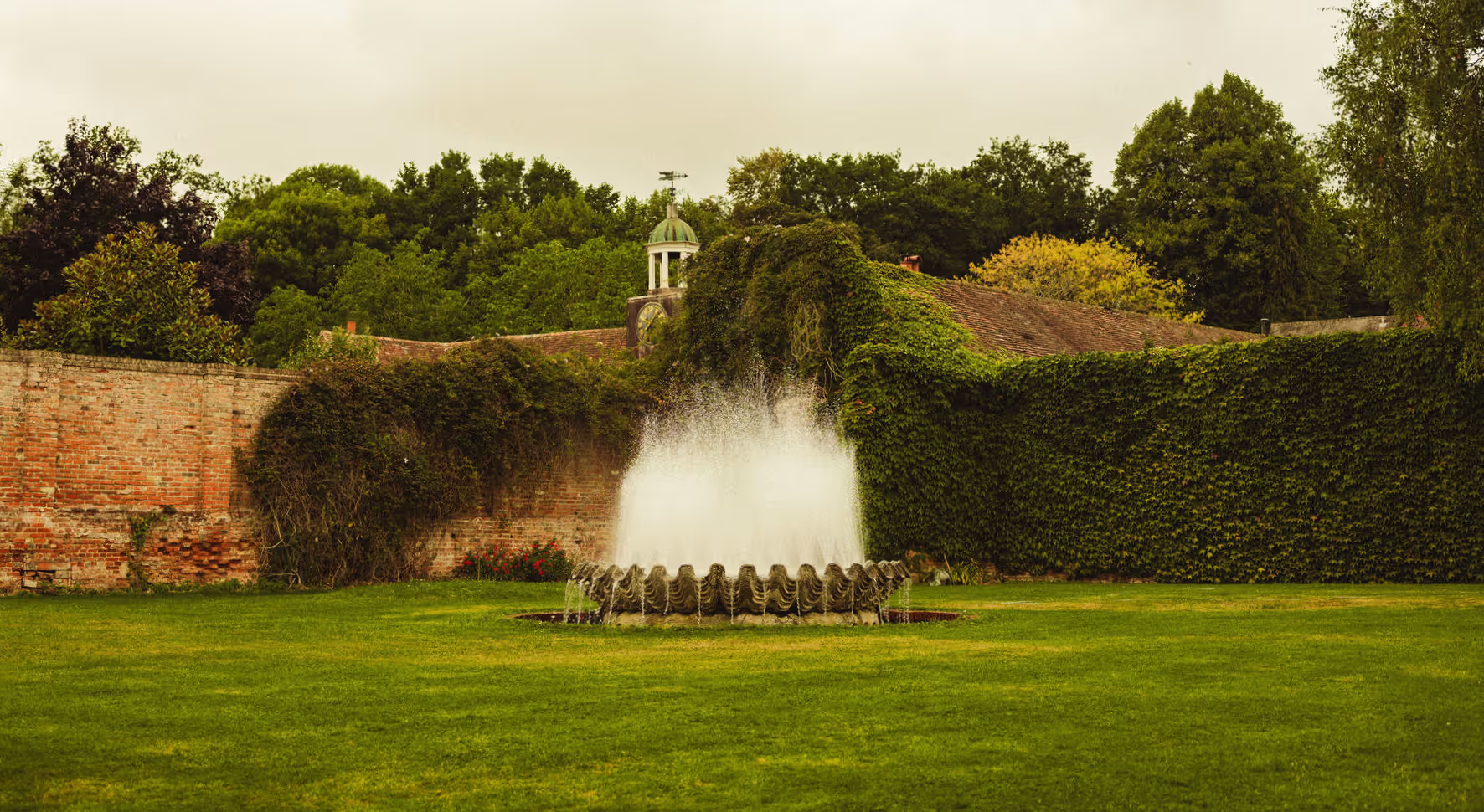
Within the formal garden walls - survivors of the original structure—new life abounds. Clematis, climbing hydrangea, and Boston ivy cascade over the masonry. A fountain graces the lawn, its gentle spray punctuating the sense of calm. Nearby, the former dairy has been repurposed as storage for the estate’s home-pressed apple juice, though it now doubles as a sanctuary for nesting starlings. Just outside, an urn brimming with ivy and trailing nepeta nestles into a carved niche of yew hedging - a carefully balanced marriage of formality and natural abundance.
To the right lies the ‘dog garden’, a spirited nod to the estate’s four-legged residents. Here, seven ornamental cherry trees provide shade for play, their spring blossoms transforming the space into a pink-and-white dreamscape. Even this practical corner carries wit: a resilient flower bed, dubbed the 'dog bed', flourishes with roses, rhododendron, and box balls despite its occasional canine invasions.
The bothy and the living lawn
Across the gravel path sits the 'bothy', a gardener’s workshop of unusual charm. Equal parts utility and curiosity cabinet, it houses tools alongside an ever-growing collection of estate finds - fragments of blue-and-white ceramics, animal skulls, Victorian glass, and even the delicate sandal of a 19th-century child.
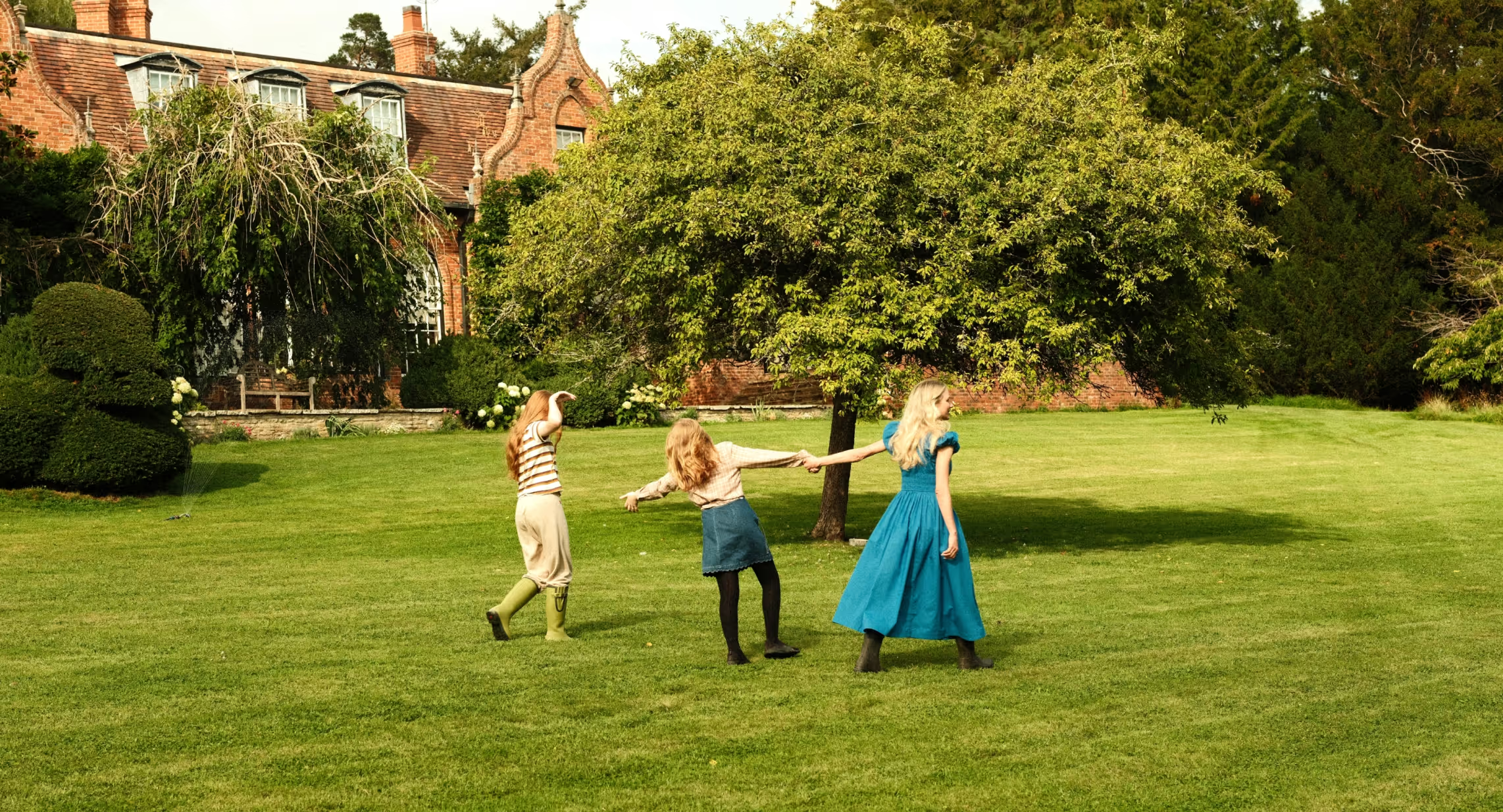
From here, one drifts naturally to the main lawn, a living carpet of wildflowers. Birdsfoot trefoil, clover, and bugle mingle freely, providing a feast for pollinators and delight for the eye. A sculptural assembly of trees - willow, cypress, hornbeam, beech, and liquidambar - anchor the expanse. In autumn, mushrooms rise unexpectedly: milkcaps, boletes, blushers, even the elusive hen-of-the-woods, clinging to the remnants of an oak long since surrendered to time.
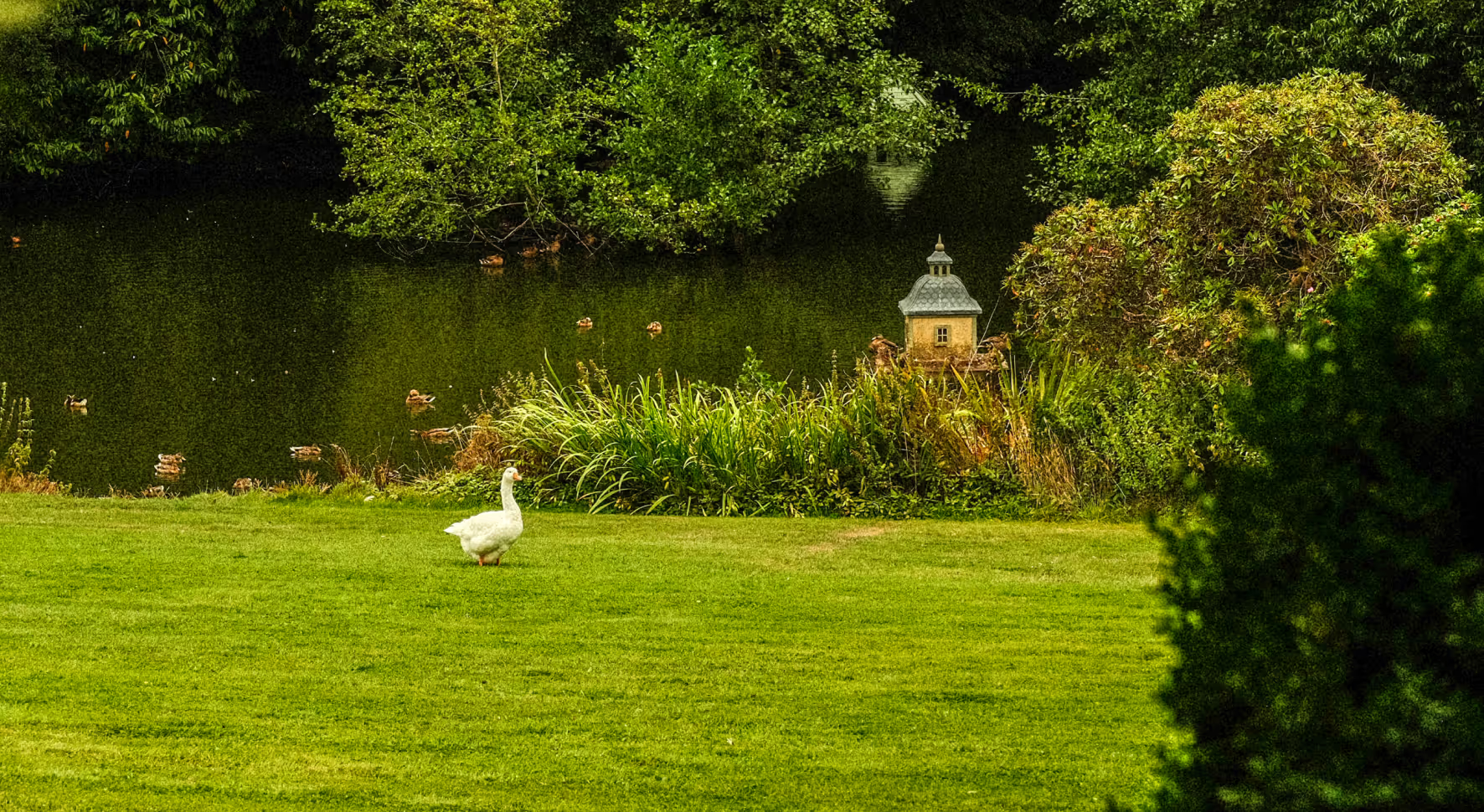
The secret tea garden
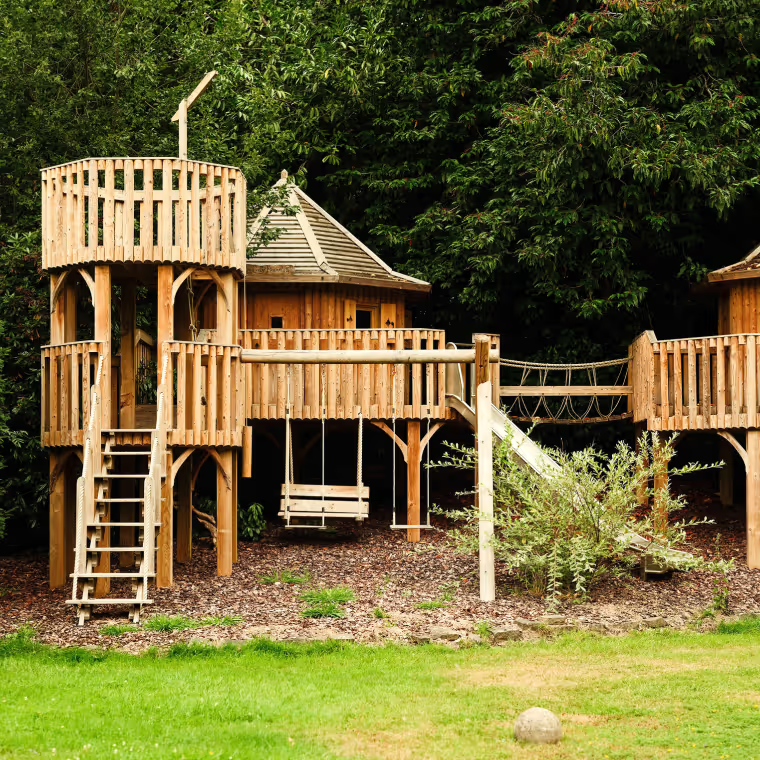
Beyond lies perhaps the estate’s most magical corner: the 'tea garden'. Concealed by an imposing yew hedge with turreted entrances, it feels like stepping into another world. A small wooden bridge ushers visitors into a hidden children’s paradise - a climbing frame, a crooked cabin, a trampoline, and a majestic wooden castle complete with rooms, swings, slide, and a daring zip-line.
It is an enchanting fusion of horticultural design and childhood imagination. At the rear, yet another hedge - now being shaped into a vast cloud formation - signals that even in its most playful spaces, Midgham Gardens is always evolving.
Midgham is not just a house or a collection of gardens; it is a dialogue between history and nature, structure and wilderness, past and present. It is an estate that breathes, where every gate, hedge, and stone carries a story. To walk its grounds is to experience not just a landscape, but a living chronicle of English country life.